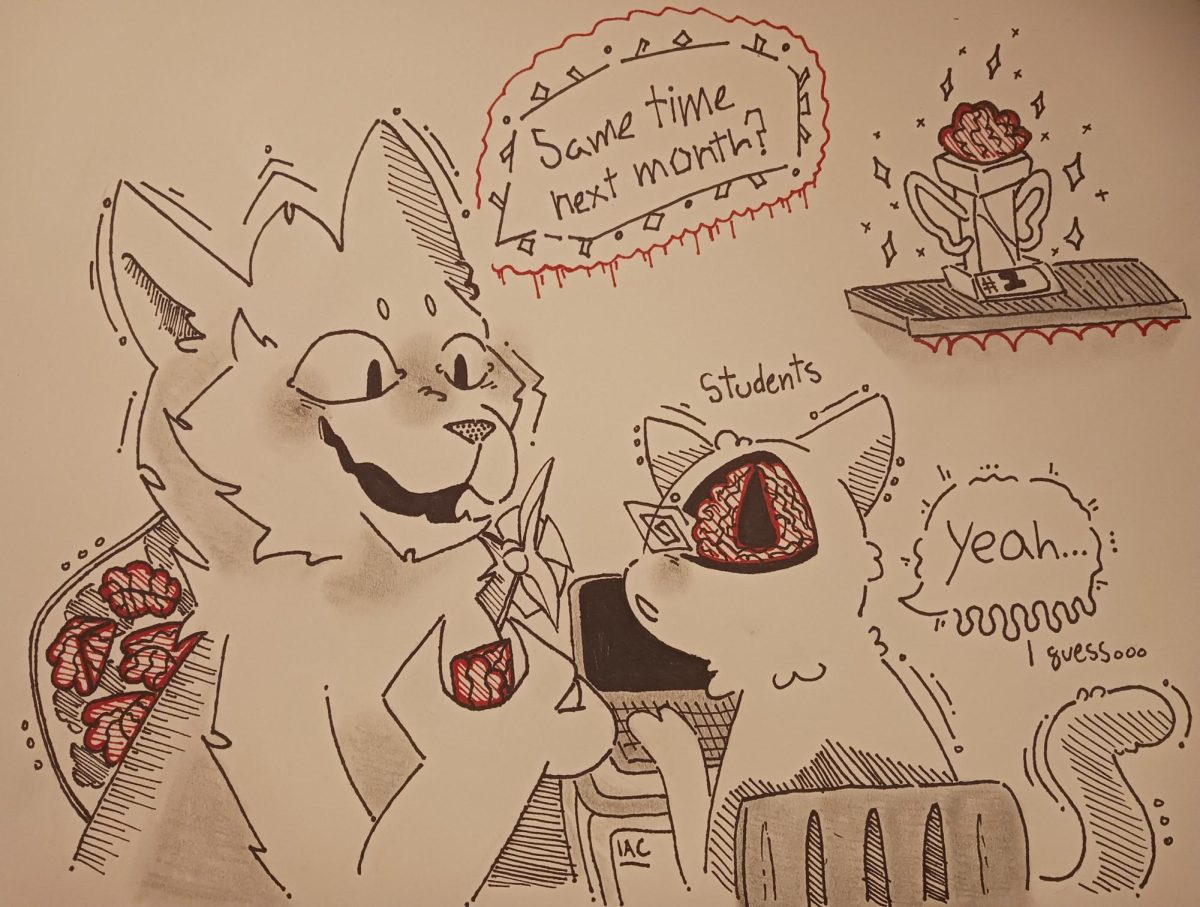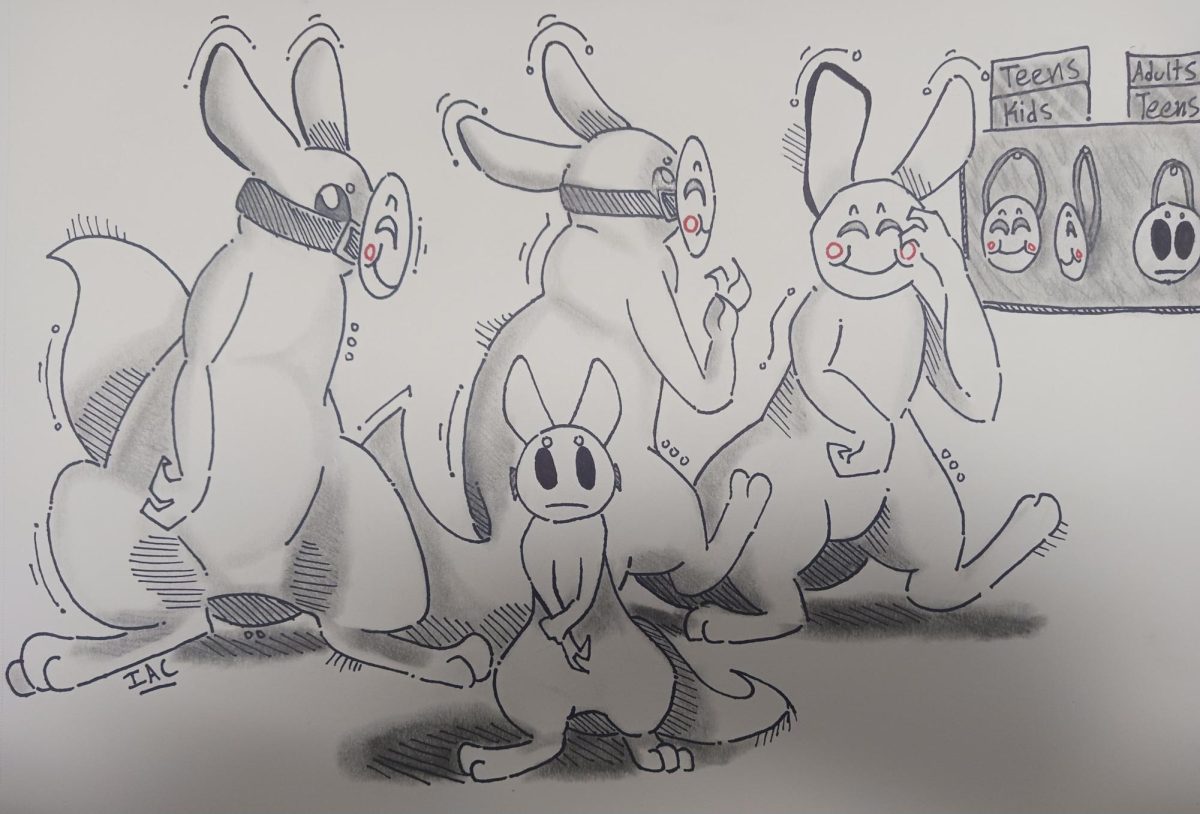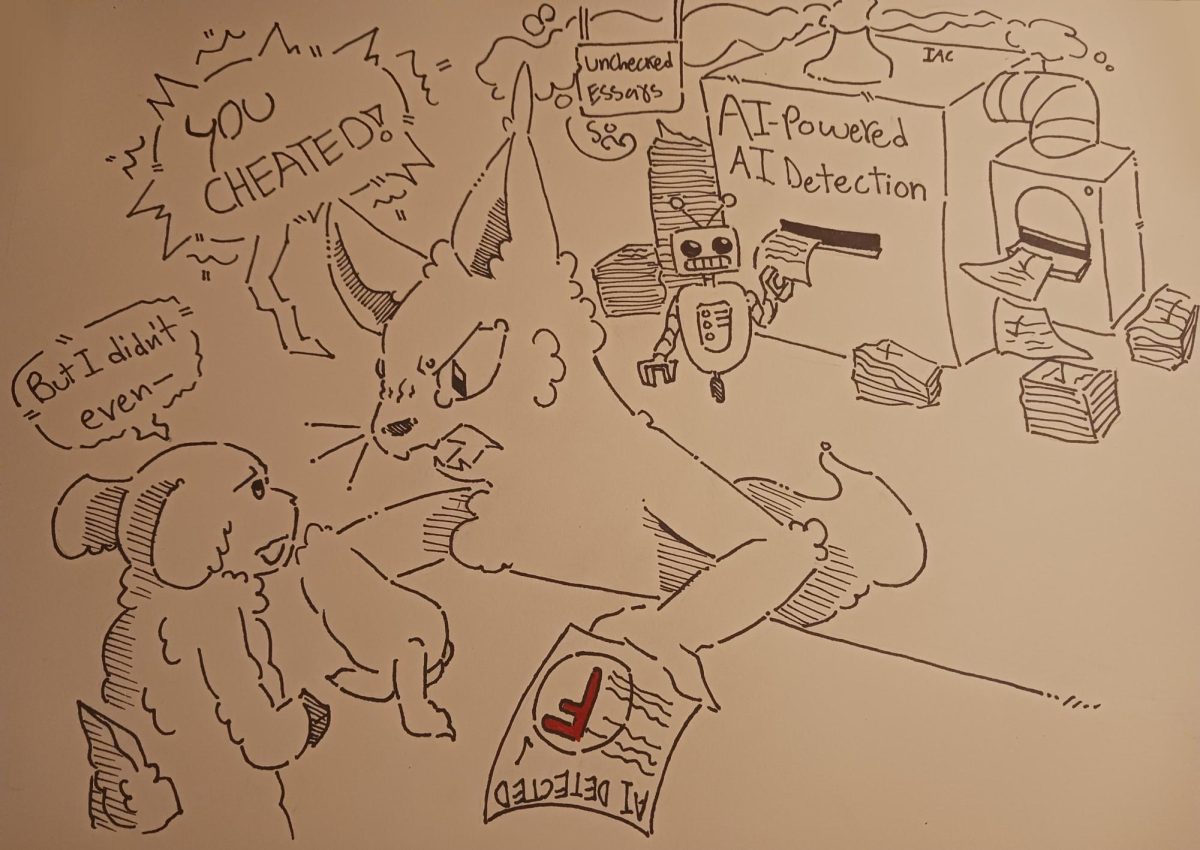
The push for AI usage in curricula, lessons, grading, and more is a concerning sight. It begs the question: why are educators absolved from using such hands-off, think-for-you technology when students are allowed no leniency whatsoever? Teachers specialize in subjects they have studied for years; they should be capable of formulating their own plans and methods. Encouraging the usage of such a harmful device—one that drives up electrical costs, wastes water, threatens creativity and jobs—is unacceptable.
In grading, a check for AI can be used by educators to determine whether a student put actual effort into an assignment. While handy in theory, the dependency on the tool can be concerning. By itself, the checker is not the sole issue; by using it and trusting the final verdict without question, teachers actively undermine a student’s work. AI is heavily prone to making mistakes—it cannot definitively tell right from wrong via common sense, which is why human intervention is necessary to prevent false positives. You cannot depend entirely on a computer’s deduction. A person can “write like AI” without having used the technology itself. Educators must review the content themselves before dishing out immediate zeroes to students.