I got a text on the morning of Sunday, Dec. 14. It was a text that is all too familiar to the American public. Look at the news, it read. There’s been another mass shooting. This time it was at Brown University. In 2025 alone, there have been 392 mass shootings resulting in the death of 348 people, according to the Gun Violence Archive. Almost anyone will agree that these numbers are staggering even though they only account for the United States. In this time where we have a disturbing amount of violence, there seems to be a link through it all: our phones. Social media is an integral part of the lives and phones of almost everyone, and while it cannot be blamed for these horrific acts, its role needs to be examined. Social media is how many people gather news, and it is a way for families and those affected to connect after such jarring events. But does it also spur those events to happen, and how can it worsen them when it does?
First, let us acknowledge the good. On the morning of the Brown University shooting, students at Brown and the facility there made social media posts alerting people to what was happening. These alerts, combined with the fact that the average amount of time people spend on social media is a little over two hours (according to the University of Maine), mean that the word spread fast. It is fair to argue that this ability to get the word out quickly could end up saving lives by alerting people not to go to the places where the violence was happening.
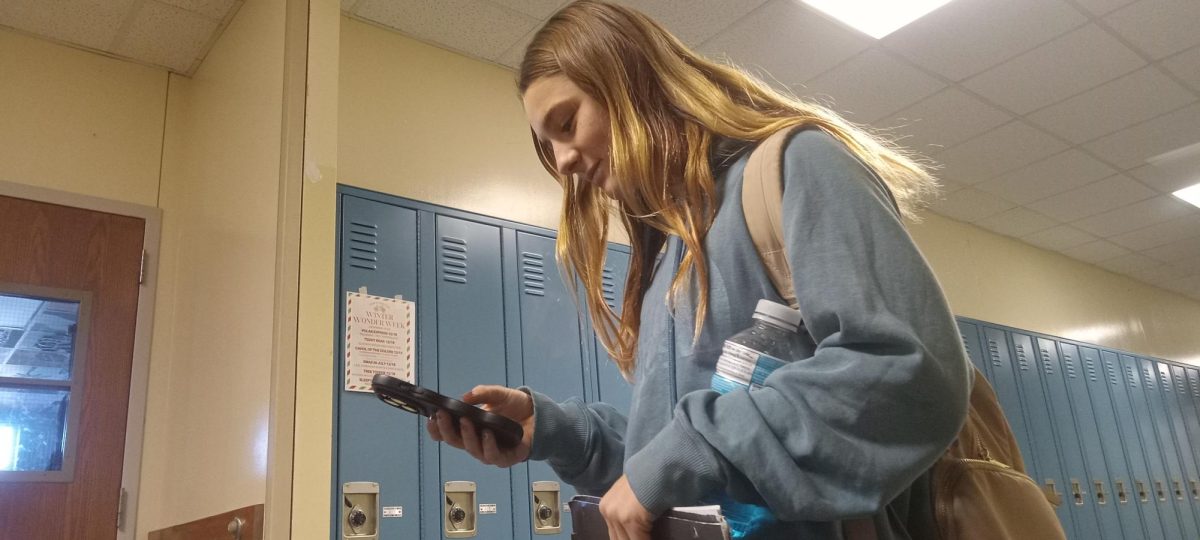
Also, had it not been for social media, many of us probably would have never known about the events at all. Step into AHS’s first-year journalism class, and you’ll find that a primary way of collecting news is through apps like TikTok and Instagram, especially among teenagers. These apps are fast, and they enable almost anyone to share their news. This can help with collecting news, as social media apps have no editor; they provide a person’s perspective, completely unadulterated.
This quick communication can put minds at ease when friends and family know the people affected, which is something I had to learn the hard way. Almost simultaneously with the shooting at Brown, there was another on the other side of the globe. In Sydney, Australia, on Bondi Beach, 15 people were gunned down by a father and son duo. The victims had gathered on the beach to celebrate the first night of Hanukkah, the Jewish festival of lights. At least 40 more people were wounded.
Once I had heard about this tragedy, I grew worried. A friend of mine lives in Sydney, not far from the beach where the shooting had taken place. Normally, over conventional modes of communication such as mail, it takes two weeks to communicate from Sydney to Iowa. Email can be sluggish, too, as most teens don’t check their inbox more than once a day. But, due to social media, I was able to contact them and know that they were alright within an hour of hearing about the shooting. Imagine the grief and anticipation that would be faced by a family member who had no idea if their loved one had been affected or even killed in one of these events. Social media is a convenient tool to get that information through fast and ease the minds of those concerned.
However, it is not all good news. Social media has been connected to rising rates of depression and anxiety, especially among teenagers. Also, there are concerns over underground sites or forums where harmful ideas and media are shared. In a paper titled “The Role of the Internet and Social Media on Radicalization,” the National Institute of Justice explored the many ways in which social media and other platforms could be a pipeline into extremism. But, they also point out that it usually isn’t by social media alone.
One stark example of this was after a shooting in Buffalo, New York. The BBC reported in an article titled “Buffalo shooting: How far-right killers are radicalised online” that the shooter, Payton Gendron, had been influenced by online sites such as 4chan. 4chan is an unmonitored online chat room, and it has been reported as a hot spot for politically extreme views. While sites like this do allow people to express their opinions freely and anonymously, they can also become a breeding ground for extremist and terroristic manifestos. The BBC article goes on to talk about other young men who had followed a similar path to Grendon, all of them heavily influenced by social media. Grendon’s path led to his murder of 10 people and a life sentence.
It is also worth noting that platforms like this can lead to the spread of misinformation about shootings. The fast-paced stream of news and the fact that it can be created by anyone without any form of fact-checking can lead to confusion.
According to a poll by the Pew Research Center conducted in 2025, 53% of people polled either often or sometimes got their news from social media. The most popular platforms among those who regularly received news from social media were Facebook, X (formerly Twitter), and TikTok. None of these sites fact-checks their users’ information, and they all allow for almost instantaneous posting of materials. Those factors can welcome misinformation, which would be moderated, if not removed, if they were allowed for review by fact checkers. This is not to say that all social media posts must undergo fact checks, but it is questionable if one should trust the news received from there. A Johns Hopkins News-Letter article titled “Is social media a reliable news source?” stated that people should “Treat social media notifications as alerts, not the final authority.” While social media may be a good way to get the word out, people should dive deeper into their research than just these platforms to really understand what is going on.
Social media plays an interesting role in our lives. It opens doors for us to connect with people experiencing similar things to us, it allows those whose voices may not be heard to speak up, and it is a fast way to ensure that those who may have been affected by horrific events, such as a shooting, are alright. But we must always take the good with the bad. These platforms can be abused to become places of misinformation and radicalization. Ultimately, it is up to us, the users, to make sure that social media is not used as a tool for evil but as a way to connect with each other, sympathize with one another, and better understand our world.