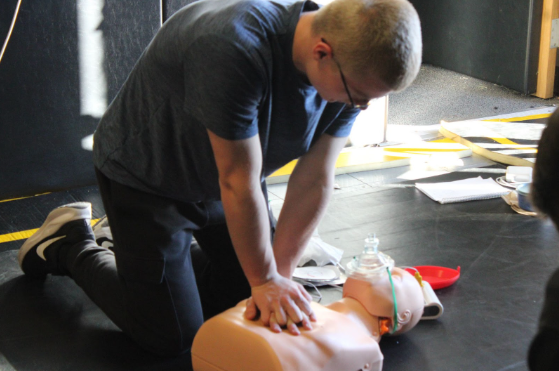
CPR, a critical emergency intervention for cardiac arrest, is taught at Atlantic High School within the Health curriculum. Nurse Kelli Evans leads these lessons. Evans emphasizes that CPR can significantly improve survival rates when a person’s heart stops. The American Heart Association estimates that CPR saves 100,000 – 200,000 lives annually. Evans says, from personal experience, “one can do all procedures properly and still not be able to resuscitate the person.” The curriculum addresses the use of an Automated External Defibrillator (AED), which is used to send a medical shock to the heart. While an AED is often necessary, Evans says bystander CPR is beneficial in case of an emergency. Some hesitate to help due to concerns about potential rib fractures. Evans clarifies that broken ribs can heal, and the priority is saving a life.
Molly O’Hara, the health and fitness instructor, highlights the ongoing learning process involved in teaching CPR, particularly in recognizing diverse emergency presentations. “I especially learn to recognize different signs of health emergencies in different scenarios for men and women.” O’Hara shared. The course, though not CPR certifying, as it would cost the district and be more timely, is a graduation requirement and aims to equip students with life-saving skills. O’Hara emphasizes the confidence CPR training provides, giving the students education, opportunity, and confidence to help in crises.
Students like Sophia Rose value the practical application of CPR, recognizing the potential to save lives. Rose appreciates the knowledge that she gained, stating that CPR is a skill that everyone should possess. The curriculum covers techniques along with their application in various real-life scenarios. This prepares students for life beyond school. Although she is certified, Rose stated, “If I weren’t already certified, this class would help me.” Rose’s statement highlights the knowledge, real-life skills, and confidence gained from this class.