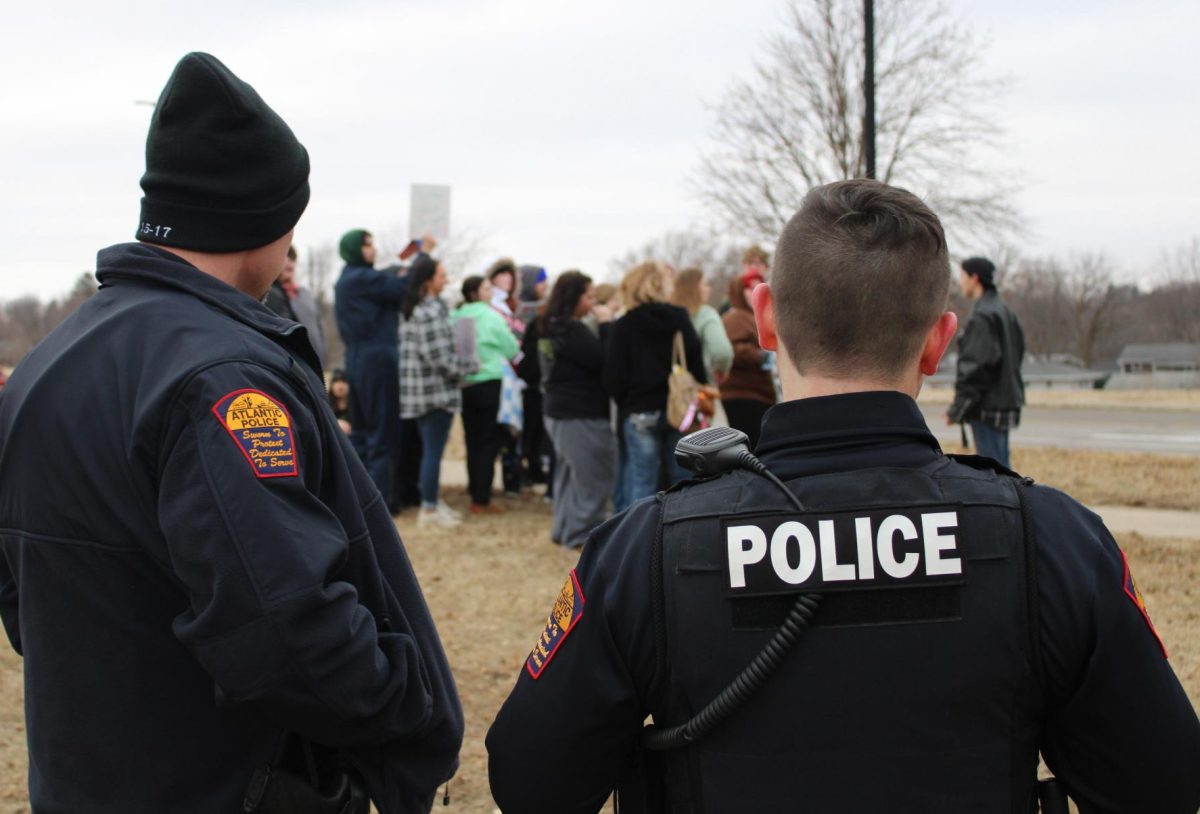
In what is potentially the most famous court case to come out of Iowa, Tinker V. Des Moines, the Supreme Court ruled that students had similar rights to free speech as any other people. This precedent has become a beacon for in school expression and protests, but what exactly is protected?
According to the American Civil Liberties Union (ACLU), walk outs actually are not protected under the First Amendment. This is why the school has the right to punish students for missing academic time due to walking out. However, a school cannot punish a student more harshly for walking out than they would punish other students for missing a class. For example, if missing a class normally gets a student one detention, then those who miss one class due to a walkout cannot be given two detentions. The punishment must be equal to what it is under normal circumstances, otherwise it is considered a First Amendment violation.
Expressing your opinion within the school, however, is almost completely protected. A student has the right to speak their mind and hand out petitions, fliers, and other literature. This is protected under the court precedent of Tinker V. Des Moines. In that case, students wore anti-war armbands to school during the Vietnam era. this was considered against school policy, and the students were ordered to remove them. But, the Supreme Court ruled that it was the student’s right to continue their free speech inside of the school, famously saying that students do not “shed their constitutional rights to freedom of speech or expression at the schoolhouse gate.”
There are limitations though. If the way in which you express your view violates a school policy unrelated to the message you are sending you still may be punished.
For example, imagine if a student wanted to raise awareness of red panda extinction, so they brought a live panda to school. The fact that they are raising awareness about the subject is not illegal, but they may be disciplined or asked to stop if the school has a “no animals allowed” policy. On the other hand, if the student were to wear a shirt saying “Let The Pandas Live” and hand out pamphlets with pictures of pandas, they could not be reprimanded because they are not breaking a pre-existing school rule unrelated to the message they are sending. This extends to clothing, as our school does have a dress code, and its rules must be followed. But the school may not punish you for the message you are sending in your words or on your clothing no matter how disagreeable or “in bad taste” they find it.
Students rights are also protected on social media. Students may speak their minds there, especially if they make the post off of campus or outside of school hours. According to the ACLU, schools actually have the “least authority to” punish what their students say on social media. However, different sites may have different guidelines on what is appropriate. Private social media companies are not required to protect your free speech, but schools can seldom punish you for what you post there.
In summary, students have the right to protest, speak their minds, and distribute media that supports them whether or not they are at school. However, walk outs are not fully protected because they have the possibility to create substantial disturbance. If you have questions on what is legal or illegal surrounding student protests, you can research further on the National Center for Youth Law website and the ACLU website. For full recitation of your First Amendment, just ask any JP journalism student.